

What Happens If a Delivery Truck Hits You in Colorado?
Getting hit by a delivery van or truck is more than just a bad day on the road. These vehicles are larger than passenger cars, often overloaded with packages, and operated by drivers under pressure to meet tight schedules.
Companies like Amazon, UPS, FedEx, and USPS move thousands of deliveries across Colorado every day—often through crowded neighborhoods, school zones, and busy intersections.
Delivery truck drivers aren’t just meeting tight timelines. They’re also juggling GPS directions, app notifications, and unfamiliar routes, increasing the risk of sudden, preventable crashes.
If you’ve suffered injuries in a delivery van accident in Colorado, you might already be dealing with medical bills, time away from work, or confusing insurance calls.
These aren’t typical car accident claims. They often involve national corporations, subcontracted drivers, and layered insurance coverage that can make accountability harder to trace. When the system feels stacked against you, the right legal team can help you take back control.
Speak with a Colorado commercial vehicle accident lawyer today — get a free consultation and learn your options.
Key Takeaways for Colorado Delivery Truck Crashes
- Delivery vans and trucks are involved in hundreds of crashes each year across Colorado’s neighborhoods and highways.
- Liability often extends beyond the driver to the delivery company or a contracted logistics partner.
- Some companies, such as Amazon, use complex driver arrangements that affect who can be held legally responsible.
- Crashes involving USPS vehicles require special legal procedures due to federal employee protections.
- A delivery truck accident lawyer can identify every liable party and build a claim that reflects the full scope of your losses.
Delivery Trucks Pose Unique Dangers on Colorado Roads
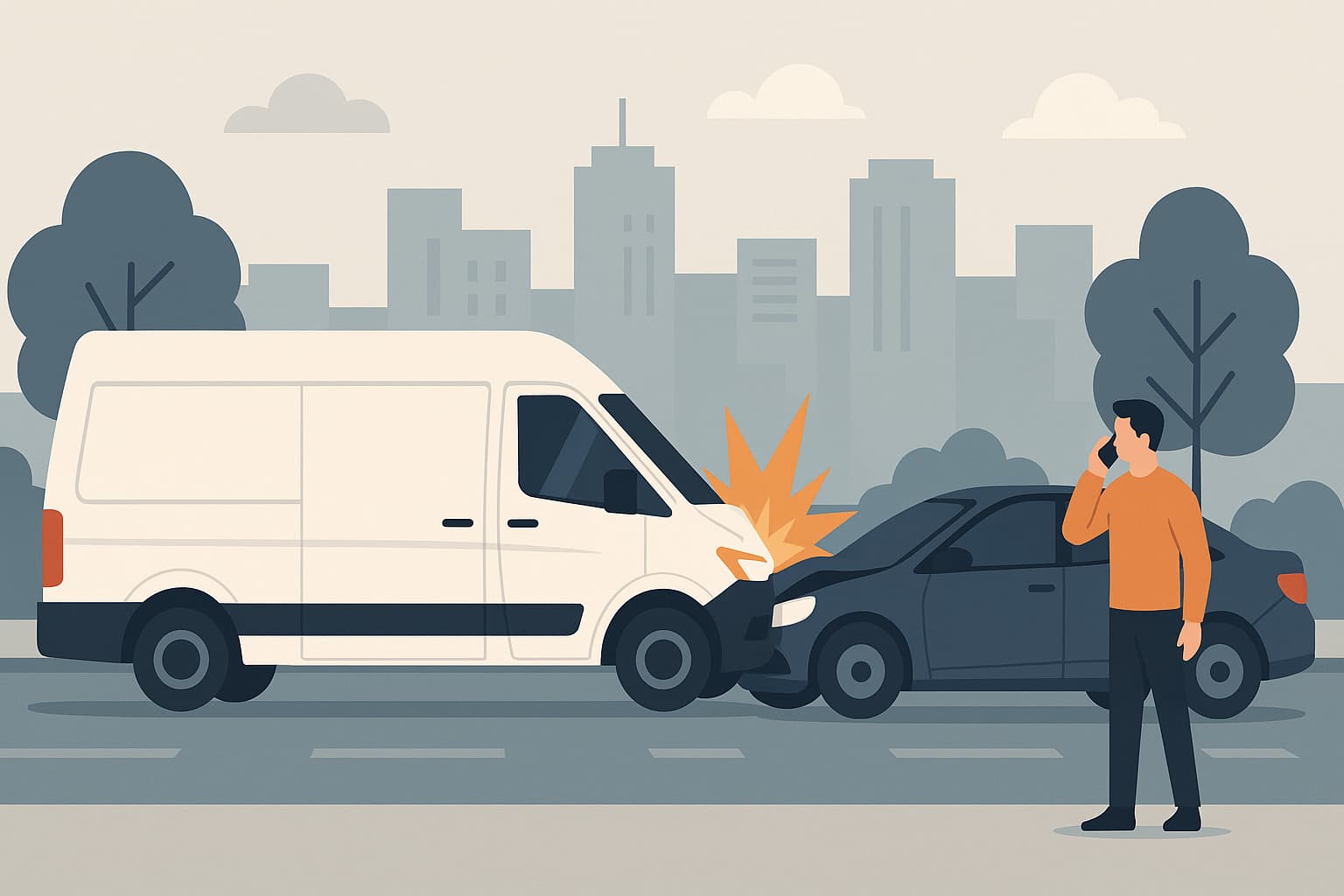
Most delivery drivers aren’t trained commercial truckers. Yet they still operate oversized vehicles under strict deadlines and complex routes, often in high-traffic or residential areas.
Delivery van accidents in Colorado frequently occur under the following conditions:
- Neighborhood routes with frequent stops: Vans block sightlines, surprise pedestrians, and swerve unexpectedly.
- Time-sensitive delivery windows: Drivers may speed, roll through intersections, or skip breaks to stay on schedule.
- Distractions from GPS and delivery apps: Constant rerouting and notifications divert attention from the road.
- Urban congestion and narrow streets: Tight delivery zones increase the risk of side-swipes and collisions with pedestrians.
Unlike 18-wheelers on highways, delivery vans spend much of their time navigating city streets like Colfax Avenue in Denver, Broadway in Boulder, or rural roads outside Colorado Springs. This puts them in direct contact with everyday drivers, cyclists, and pedestrians.
The combination of heavy traffic, high pressure, and lack of commercial licensing requirements makes delivery vans a major source of injury risk across the state.
Who Can Be Held Liable After a Delivery Truck Crash?
Liability in delivery truck accidents isn’t always clear-cut. Multiple parties may be involved, and each has different levels of responsibility depending on how the delivery system is structured.
Here are some of the potentially liable parties:
- The driver, if they acted carelessly or violated traffic laws
- The delivery company if the driver is a direct employee (UPS or FedEx Express, for example)
- A third-party contractor if the driver was hired through a subcontracted route (common with Amazon and FedEx Ground)
- A vehicle maintenance provider if the crash involved mechanical failure
- The shipping company or warehouse if the vehicle was overloaded or improperly packed
Colorado follows a modified comparative negligence law under C.R.S. § 13-21-111, meaning you can still recover damages if you were less than 50% at fault. That makes it critical to determine the complete chain of liability as early as possible.
What Happens if the Delivery Driver Was Using Their Personal Vehicle?
Some drivers, particularly those working for Amazon Flex or DoorDash, use their own vehicles to make deliveries. This raises the question: does personal auto insurance apply when these delivery drivers cause accidents?
Here’s how it usually breaks down:
- If the delivery driver was off duty: Their personal insurance may be responsible
- If the driver was logged in and on the job: The company’s commercial insurance policy should apply
- If the driver has no commercial coverage: You may need to pursue multiple policies or uninsured/underinsured motorist benefits
Determining which policy applies often depends on app data, delivery logs, and other employer records. This is where legal support makes a difference. A delivery van accident lawyer can subpoena records and clarify coverage when companies don’t cooperate.
Collisions with USPS, FedEx, UPS, and Amazon Delivery Drivers
Not all delivery companies handle crashes the same way, and who the driver works for can shape everything from your legal options to how fast you get a response on your claim.
Amazon Delivery Accidents
Amazon often hires independent contractors through third-party companies. If an Amazon delivery van driver hits you, suing Amazon directly may not be an option unless you can prove Amazon controlled or influenced the driver’s actions. You may instead need to file against the contractor or the driver personally.
FedEx Truck Accidents
FedEx Ground also uses independent contractors who own their own routes. FedEx Express, however, employs drivers directly. Whether the driver was operating for FedEx Ground or Express may affect who’s liable.
UPS and Other Corporate Drivers
UPS employs most of its drivers, making it more straightforward to bring a claim against the company. However, these claims often involve strong defense teams and high-stakes insurance policies.
USPS Truck Crashes in Colorado
Accidents involving postal trucks fall under the Federal Tort Claims Act (FTCA). This law allows injured people to bring claims against federal agencies, but the process has strict rules and deadlines. You must file a government claim form within two years, separate from a civil lawsuit.
Steps to Take After a Delivery Truck Crash
If you’ve already seen a doctor or are in the middle of treatment, you’re doing the right thing. Some injuries take time to fully reveal themselves, especially after a crash involving a heavy commercial vehicle. Even if you feel okay, a full medical evaluation creates the documentation you may need later for both your care and for any legal claim.
But after that initial medical step, there are still important things you can do to protect your case and preserve your rights. These actions can make a significant difference in how your claim is valued and how quickly it moves forward:
- Hire a personal injury lawyer. Insurance companies representing delivery fleets often start building their defense immediately. A lawyer levels the playing field, handles the insurance companies, and begins collecting the evidence you might not know to request on your own.
- Keep every medical appointment. Insurers may use gaps in treatment or missed follow-ups to suggest your injuries aren’t serious or that you’ve already recovered. Showing up and staying consistent shows a clear timeline of your injury, pain, and recovery.
- Start a written or video journal. Document your physical symptoms, emotional strain, sleep issues, medication side effects, or any changes in mobility. These first-hand records reflect struggles that never appear in your medical charts and support your claim for pain and suffering damages.
- Preserve all crash-related evidence. Keep photos of your injuries, property damage, damaged clothing, and the scene of the crash if available. Also, hold on to receipts, out-of-pocket expenses, and any communication from insurance representatives.
- Don’t give a recorded statement without legal advice. Even casual phone calls can be used against you. Statements made while medicated, exhausted, or confused can carry real weight later on. It’s best to tell insurance adjusters to speak with your lawyer.
The hours and days after a delivery truck crash may be chaotic, especially if you’re dealing with serious injuries. But taking these steps, if you are able to, can strengthen your claim. If you’re unsure where to start, a lawyer can take the lead and let you focus on getting better.
Injuries Common in Colorado Delivery Truck Accidents

Collisions involving delivery vans often cause more serious injuries than standard car crashes. These vehicles are heavier, harder to maneuver, and frequently loaded with cargo. When they strike a pedestrian, cyclist, or smaller passenger vehicle, the physical consequences can be devastating.
Some of the most common injuries include:
- Spinal cord damage that results in long-term pain or paralysis
- Traumatic brain injuries (TBIs), even without a direct head impact
- Multiple fractures, particularly in the legs, pelvis, or ribs
- Crush injuries from being pinned between the van and another object
- Severe soft tissue damage requiring surgery or ongoing rehab
Recovery from a delivery truck crash often extends far beyond the hospital. These injuries can derail a career, strain relationships, and make once-simple tasks like driving, sleeping, or lifting a child feel impossible. Proving the full impact takes clear medical evidence, support of experts, and a legal team who can show what your life looked like before the crash and what your injuries are costing you now.
What Compensation Can You Recover After a Delivery Truck Accident?
Colorado law allows injury victims to pursue compensation for the injuries and losses they’ve suffered, but the amount and type of damages depend on how your life has been affected.
Here’s what may be included in a claim:
- Medical expenses: These include emergency care, hospital stays, surgery, physical therapy, specialist visits, and any future medical treatment you may need.
- Lost income and lost earning capacity: If you had to take time off work or can’t return to your job at full capacity, you may be entitled to recover both past and projected income losses.
- Pain and suffering: These damages account for physical discomfort, chronic pain, and the emotional toll of the injury—something that doesn’t show up on a bill but can deeply affect daily life.
- Loss of enjoyment or quality of life: If your injuries prevent you from doing the things you used to enjoy, whether it’s hiking, skiing, playing piano, or simply walking without pain, this loss can be included in your claim.
- Property damage: If your vehicle, bicycle, or personal items were damaged in the crash, you may be compensated for repair or replacement costs.
In rare but serious cases, punitive damages may also be awarded, especially if the delivery company or driver acted with extreme recklessness, such as driving under the influence or knowingly sending out unsafe vehicles.
No two claims are the same. What matters is not just what was lost, but what it means to you. A delivery truck accident lawyer can help build a claim that reflects the true scope of your injuries, not just what the insurance company is willing to offer.
How Delivery Company Policies Can Affect Your Injury Claim
When a crash involves a delivery vehicle, liability doesn’t stop with the driver. The company’s internal policies, including how they train, manage, and monitor their drivers, can have a direct impact on both fault and the value of your claim. These aren’t just background details. They often explain how the crash happened in the first place.
Here’s how company practices can come into play:
- Unrealistic delivery targets: Some companies assign routes that can’t be completed safely within the allotted time. This creates pressure to speed, skip breaks, or ignore traffic signals, putting everyone else on the road at risk. If route logs show the driver was behind schedule, that may support a claim of corporate negligence.
- Inadequate training or hiring: If the company failed to run proper background checks, hired someone with a poor driving history, or skipped essential safety training, they may be held liable for negligent hiring or supervision.
- Ignored vehicle maintenance: Delivery trucks rack up thousands of miles every month. If a company failed to maintain brakes, tires, or steering components and those issues contributed to the crash, they could be responsible for more than just basic damages.
- Lack of driver monitoring: Many delivery companies use GPS tracking or telematics systems to flag unsafe driving behavior. If they had evidence of repeated violations but failed to act, that inaction could be used to show a pattern of negligence.
Evidence like this isn’t visible from a crash report or insurance claim form. It’s only accessible through investigation and legal discovery, which an experienced lawyer can initiate on your behalf.
FAQs About Delivery Van Accidents in Colorado
What should I do if I didn’t get the driver’s information?
+
You can still pursue a claim. Contact a delivery van accident lawyer, who can obtain the crash report from the police if you don’t have a copy. They can also help identify the vehicle using surveillance footage, eyewitness statements, or license plate databases.
Can a lawyer obtain the delivery truck’s black box data?
+
Yes. Many commercial vehicles have onboard computers—commonly called black boxes or telematics systems—that record speed, braking, GPS data, and more. This information can be crucial in proving negligence.
A delivery van accident lawyer can issue a preservation letter and initiate legal discovery to compel the company to release this evidence before it is lost or destroyed.
Can I sue the company directly if the driver was working?
+
Yes, especially if the driver was an employee or if the company controlled how the work was performed. If the driver was an independent contractor, the legal strategy may differ.
An attorney can evaluate the employment relationship to determine whether the company can be held liable for the crash.
What if the delivery driver left the scene?
+
If you were the victim of a hit-and-run involving a delivery vehicle, contact the police and seek medical care. A lawyer may be able to identify the driver using employer records or camera footage. If the driver is not found, your uninsured motorist coverage may apply.
Is there a time limit for filing a claim?
+
Yes. In most cases, Colorado’s statute of limitations allows three years from the date of the crash to file a personal injury claim involving a motor vehicle. If a government-owned vehicle (such as USPS) was involved, a different and shorter notice deadline may apply.
What if the driver was using a rental or leased van?
+
Commercial rental vans are common, especially during peak delivery seasons. Depending on the rental agreement and insurance structure, liability may fall on the driver, the rental company, or the delivery contractor.
Claims involving leased vehicles often require additional investigation into insurance layers, maintenance responsibilities, and contractual agreements.
When You’re Ready to Get Answers, We’re Ready to Help
At Fuicelli & Lee, we help injured people across Colorado hold delivery companies and their drivers accountable. Our delivery truck accident attorneys in Denver have experience with high-stakes commercial crash claims involving complex liability, aggressive defense strategies, and serious injuries. We don’t get paid unless you win.
Were you injured in a Colorado accident? Fuicelli & Lee offers free consultations — call (303) 444-4444 or contact us online.