

Who is at Fault in Most Motorcycle Accidents?
Colorado offers some of the most spectacular riding in the country, from the twists of Peak to Peak Highway to the open stretches of I-70. However, every rider knows the frustration of sharing the road with drivers who simply do not pay attention. You have likely experienced it firsthand: a car drifts into your lane or cuts you off at an intersection, and the driver looks at you as if you were the one in the wrong.
There is an unfair stigma that motorcyclists are reckless daredevils who cause their own injuries. The reality is often the exact opposite. When examining who is at fault in most motorcycle accidents, the data and crash reports frequently point to the driver of the passenger vehicle, not the rider. If you have been hurt by a negligent driver, an experienced Denver motorcycle accident lawyer can help you cut through the bias and prove where the blame truly lies.
Key Facts About Who is at Fault in Most Motorcycle Accidents
- Drivers often violate the right of way: The most common cause of motorcycle crashes is a car turning left in front of a rider who has the right of way.
- “Inattention blindness” is real: Many drivers look right at a motorcycle but fail to cognitively “see” it because they are only scanning for other vehicles.
- Bias affects insurance claims: Adjusters often default to blaming the rider for speeding or recklessness without evidence, forcing riders to fight harder for fair compensation.
- Fatalities are at record highs: Colorado saw 165 motorcycle deaths in one recent year, a drastic increase that highlights the growing danger negligent drivers pose to riders.
The Myth of the Reckless Rider
Society often paints motorcyclists as risk-takers who weave through traffic at high speeds. While reckless riding does happen, the vast majority of riders are safety-conscious. They have to be; they lack the steel cage and airbags that protect car occupants.
NHTSA data confirms that this reputation is unearned. In collisions involving a motorcycle and another vehicle, the driver of the passenger car is at fault about 58% of the time. The motorcyclist is found to be responsible in only about 40% of these crashes, with the remaining 2% attributed to other factors.
The facts remain: Most accidents are not caused by a rider performing a stunt. They are caused by a driver who is distracted, impatient, or simply careless.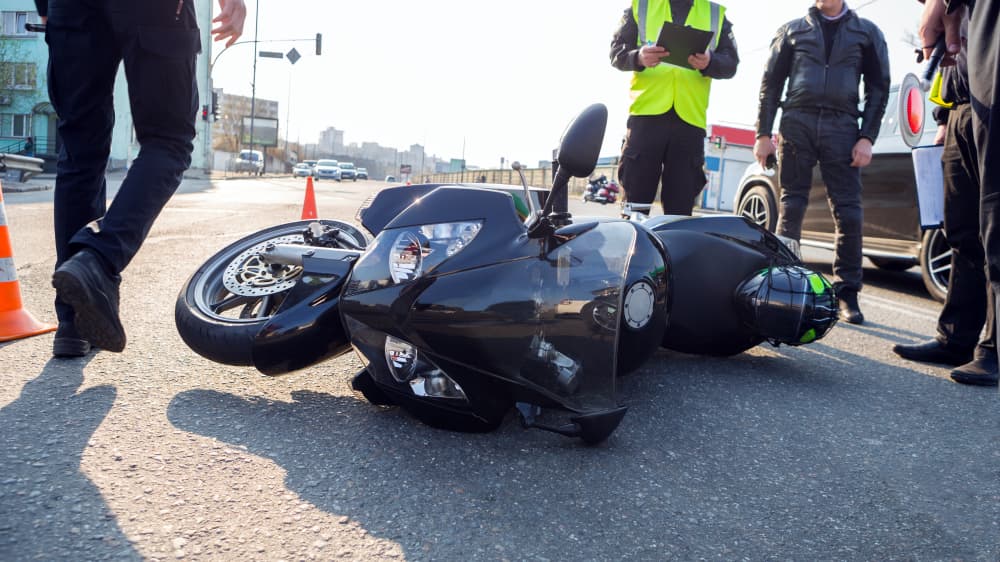
Why Do Some Drivers Fail to See Motorcycles?
The primary reason drivers cause accidents is a failure to yield. This usually stems from a psychological phenomenon known as “inattention blindness.” A driver approaches an intersection scanning for threats. Their brain is trained to look for large objects like SUVs, trucks, and sedans.
When a motorcycle enters their field of vision, their brain may not register it as a vehicle or a threat because it has a smaller profile. The driver looks, fails to process the rider’s presence, and pulls out directly into their path. This is negligence, plain and simple. It is a driver’s duty to look for all road users, not just the big ones.
Common Scenarios Where Drivers Are Liable
Proving that the other driver caused the crash requires looking at the specific mechanics of the collision. Most multi-vehicle motorcycle accidents fit into a few distinct categories where the passenger car is clearly at fault.
Left-turn collisions
This is the single most dangerous scenario for a rider. You are traveling straight through an intersection with a green light. A car coming from the opposite direction attempts to turn left across your lane. The driver misjudges your speed or doesn’t see you at all, turning directly across your path.
In almost every instance, the vehicle turning left must yield to oncoming traffic. Unless you were running a red light or speeding excessively, the driver turning left is liable for violating your right of way.
Unsafe lane changes
Blind spots are a major hazard, but they are not an excuse. Drivers frequently merge into a neighboring lane without checking their mirrors or turning their heads. Because motorcycles are smaller, they can easily disappear in a blind spot.
However, a driver has a legal responsibility to ensure a lane is clear before moving over. If a car sideswipes you or forces you off the road because they didn’t look, they are at fault.
Rear-end collisions
Motorcycles can stop much faster than heavy passenger cars. If a driver is following you too closely (tailgating) and you have to brake for a hazard, they may not be able to stop in time. Being rear-ended at a stoplight or in slow traffic can be catastrophic for a rider, often ejecting them from the bike. The driver in the rear is almost always presumed negligent for failing to maintain a safe following distance.
Colorado Motorcycle Statistics Reveal a Crisis
The dangers facing riders in Colorado are not hypothetical; they are backed by alarming data. The Colorado Department of Transportation (CDOT) and Colorado State Patrol have tracked a worrying rise in fatalities.
- Record-breaking fatalities: In one recent year, Colorado recorded 165 motorcyclist deaths. This is the highest number ever recorded in the state and represents a drastic increase from previous years.
- Disproportionate risk: While motorcycles make up only about 3% of registered vehicles in the state, they accounted for nearly 25% of all traffic deaths in recent years.
- Dangerous counties: Recent state data identified El Paso County, Jefferson County, Denver County, Adams County, and Arapahoe County as the areas with the highest number of fatal crashes.
These numbers suggest that as traffic density increases along the Front Range, drivers are becoming less attentive to the vulnerable road users around them.
Overcoming Bias in Insurance Claims
When you file a claim after an accident, you may notice an immediate shift in tone from the insurance adjuster. Even if the police report says the other driver failed to yield, the insurance company may try to pin the blame on you.
They might suggest you were speeding, “came out of nowhere,” or could have avoided the crash if you were more skilled. This is a tactic designed to save money. Proving negligence after a Colorado motorcycle accident often requires finding video footage, witness statements, or skid mark analysis to refute these biased assumptions.
Helmet Use and Legal Rights
Colorado law does not require riders over the age of 18 to wear a helmet. However, CDOT reports a persistent pattern of unhelmeted fatalities. In 2022, roughly half of all motorcyclist deaths in the state involved riders who were not wearing helmets.
While wearing a helmet is undeniably safer, choosing not to wear one (if you are an adult) does not mean you caused the accident. A negligent driver who turns left in front of you is still at fault, regardless of your safety gear. However, the defense may argue that your injuries would have been less severe if you had a helmet. This is a complex legal area where Colorado motorcycle laws regarding mitigation of your damages come into play. An experienced motorcycle accident lawyer will fight to keep the blame where it belongs, on the faulty driver, not on your helmet use.
Steps to Protect Your Motorcycle Accident Claim
If you have already visited the emergency room or are currently receiving care, you have taken the most vital step for your health. If you have not seen a doctor yet, do so as soon as you can.
Toughing it out is dangerous for your physical recovery, and insurance companies will use any delay or gap in treatment to argue that your injuries are not serious or were caused by something else.
Once your immediate medical needs are addressed, there are specific things you must do to safeguard your legal rights.
- Hire an experienced attorney: The bias against motorcyclists is real, and insurance adjusters often try to manipulate unrepresented riders into accepting lowball offers. An attorney acts as your shield, handling all communication and working to establish the other driver’s negligence through a thorough investigation.
- Keep all medical appointments: It is exhausting to go to physical therapy or follow-up visits when you are in pain, but missing appointments hurts your case. Consistent attendance creates a medical paper trail that proves you are taking your recovery seriously and that your injuries require ongoing care.
- Journal your experience: Write down or video record your daily struggles. Document your pain levels, the activities you can no longer do, and how the injuries affect your sleep and mood. This evidence is crucial for proving pain and suffering damages later.
- Avoid social media: Insurance adjusters frequently monitor social media profiles looking for evidence to use against you. Do not post about the accident, and ask friends and family not to tag you in photos until your case is resolved.
Knowing what steps to take after a motorcycle accident helps you avoid accidentally handing the insurance company ammunition to devalue your claim while you are trying to recover.
Common Injuries Associated with Motorcycle Accidents
Because riders are exposed, the injuries caused by negligent drivers are often life-altering. We frequently see clients suffering from:
- Road rash: This is more than a scrape; severe road rash can require skin grafts and lead to dangerous infections.
- Traumatic brain injuries (TBI): Even with a helmet, the force of impact can cause concussions or permanent cognitive damage.
- Orthopedic fractures: Broken legs, wrists, and ribs are common as riders instinctively try to brace for the fall.
- Spinal cord injuries: These can result in partial or total paralysis, requiring a lifetime of care.
We evaluate your motorcycle accident injuries to fight for a settlement that addresses your long-term recovery needs, not just the initial emergency room bill.
The Role of Comparative Negligence in Motorcycle Crash Cases
Colorado follows a modified comparative negligence rule. This means that even if you were partially at fault—perhaps you were going 5 mph over the limit—you can still recover damages as long as you were less than 50% responsible.
Insurance companies love to argue that a rider was at fault to lower their payout or avoid paying you altogether. They might claim that because you were lane filtering, which is now legal in Colorado in specific circumstances, you caused the accident.
Determining fault in a motorcycle accident case is rarely black and white. Your attorney’s job is to minimize the fault attributed to you so you can receive the compensation you need.
Questions Clients Often Ask About Colorado Motorcycle Accidents
Is lane splitting legal in Colorado?
Lane splitting (riding between lanes at high speeds) is illegal. However, Colorado recently passed a law allowing “lane filtering.” This permits riders to pass stopped vehicles in the same lane if traffic is stopped and the rider is moving at 15 mph or less.
What if the other driver didn’t make contact?
This is called a “no-contact” accident. If a car cuts you off and you lay the bike down to avoid hitting them, the driver is still liable for your injuries. These cases are harder to prove without a witness or dashcam footage, as the driver often keeps driving.
How long do I have to file a claim?
Generally, Colorado’s statute of limitations allows you three years from the date of the motorcycle accident to file a lawsuit in Colorado. This is longer than the standard two-year limit for other personal injury cases, but it is wise to act sooner. How long it takes to recover compensation after a motorcycle accident depends on the nature and severity of injuries, the duration of medical treatments, and how quickly evidence is preserved.
What if my loved one died in a crash?
If a rider is killed by a negligent driver, the surviving family may be able to file a wrongful death lawsuit. This can provide compensation for funeral costs, lost future income, and loss of companionship. Losing a loved one in a motorcycle accident is devastating, and legal action can provide financial stability during a tragic time.
Do I really need a lawyer?
If you have serious injuries, yes. Insurance adjusters are trained to underpay claims, especially for motorcyclists. They bank on you not knowing the true value of your case. If you need to fight the bias and secure full, fair, and complete compensation for your medical bills and suffering, legal representation is essential.
We Fight for Motorcycle Riders Injured by Negligent Drivers
 At Fuicelli & Lee, we know that being a motorcyclist does not make you a second-class citizen on the road. We understand the bias you face from insurers and police, and we know how to dismantle it. Our team of results-driven personal injury attorneys is not afraid to take a case to trial if the insurance company refuses to offer a fair settlement.
We handle all of our cases on a contingency fee basis, meaning you pay nothing unless we win. Leaving the legal battle to us allows you to focus on your recovery and positions you for the best possible outcome.
Call us or contact us online today for a free, no-obligation consultation. We represent riders in Denver, Longmont, and throughout the Front Range. For out-of-state riders injured in Colorado, we offer virtual legal guidance and representation.