

When Cargo Loads Cause Crashes: Who’s Liable for Improperly Loaded Trucks in Denver?
A serious truck accident can change everything in seconds. When a crash involves a commercial truck, the damage is often severe—but the cause isn’t always driver error. In many cases, improperly loaded or unsecured cargo is the real reason behind the crash.
When cargo shifts, spills, or destabilizes a truck, it can trigger devastating multi-vehicle accidents. That raises a critical question: Who is liable for an improperly loaded truck accident in Denver?
Understanding liability is essential if you’ve been injured, because multiple parties—not just the driver—may be responsible.
Key Takeaways About Improperly Loaded Truck Accidents in Denver
- Cargo-related truck accidents often involve multiple potentially liable parties, not just the driver.
- Federal FMCSA cargo securement rules and Colorado trucking laws set strict standards for how loads must be secured.
- Liability may fall on trucking companies, cargo loaders, shipping companies, or third-party logistics providers.
- Evidence such as inspection reports, load documentation, and expert analysis is critical in these cases.
- Improperly loaded cargo can lead to high-value claims due to the severity of injuries and complexity of fault.
How Can Improperly Loaded Cargo Cause a Truck Accident?
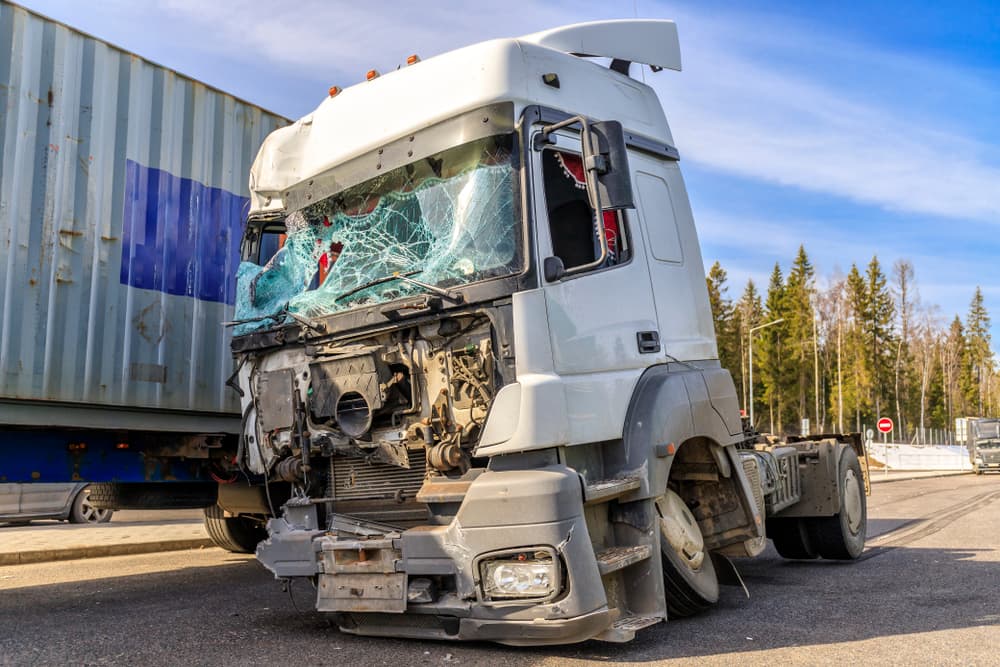 Commercial trucks carry massive loads across Denver highways like I-25, I-70, and I-225. When cargo isn’t properly secured or balanced, it creates serious hazards.
Common cargo-related hazards include:
- Shifting loads that throw off a truck’s center of gravity
- Falling debris that strikes other vehicles
- Jackknife accidents caused by sudden weight imbalance
- Rollover crashes due to uneven distribution
- Extended stopping distances from overloaded trucks
Denver’s busy roadways—including I-25, I-70, and I-225—see heavy commercial traffic. A single improperly secured load in these areas can affect dozens of vehicles in a matter of seconds.
Even a minor mistake during loading can have serious consequences once a truck is traveling at highway speeds. A successful injury claim may depend on who made the mistake and how it caused the crash that injured you. Knowing what steps to take after a truck accident can help protect your rights and strengthen your claim.
Who Can Be Held Responsible for Truck Cargo Accidents?
In most Denver cargo truck accidents, liability is shared across multiple parties, not just the driver. Identifying fault depends on who controlled, loaded, and inspected the cargo.
| Party | Potential Responsibility | Example of Negligence |
| Truck Driver | Inspecting and monitoring cargo | Failing to check load before driving |
| Trucking Company | Training, safety compliance, oversight | Allowing unsafe loading practices |
| Cargo Loaders / Warehouse | Properly securing and distributing cargo | Uneven weight distribution or loose restraints |
| Shipping Company / Broker | Arranging shipment details and load specifications | Overloading truck or providing incorrect cargo info |
| 3PL (Logistics Provider) | Coordinating transport and handling logistics | Failing to ensure proper cargo handling across parties |
Potentially liable parties include:
1. The Truck Driver
Drivers are responsible for:
- Inspecting cargo before driving
- Ensuring the load is secure
- Monitoring for load shifting during transit
If a driver fails to perform required inspections or ignores warning signs, they may share responsibility.
2. The Trucking Company
The company that owns or operates the truck may be liable if it:
- Failed to properly train drivers
- Pressured drivers to skip inspections
- Allowed unsafe loading practices
Trucking companies are often responsible for overall safety compliance for every vehicle and driver on the road.
3. Cargo Loaders or Warehouse Workers
In many cases, third-party loading crews and their employers can be held responsible for securing cargo if they:
- Improperly distribute weight
- Use faulty restraints
- Fail to follow safety protocols
4. Shipping Companies or Freight Brokers
Companies that arrange shipments may also play a role, especially if they:
- Overload a truck
- Provide incorrect cargo specifications
- Fail to ensure proper handling
5. Third-Party Logistics (3PL) Providers
Modern supply chains often involve multiple contractors. A third-party logistics company may coordinate loading and transportation, creating additional layers of responsibility for dangerous accidents.
Cargo Securement Laws in Colorado Trucking
Truck cargo isn’t just a matter of best practices—it’s governed by strict federal safety standards that apply across Colorado and the rest of the country. These rules are designed to prevent shifting loads, falling debris, and dangerous imbalances that can lead to serious crashes.
At the federal level, the Federal Motor Carrier Safety Administration (FMCSA) sets detailed cargo securement requirements for commercial vehicles. These regulations require that cargo be properly immobilized with appropriate tie-downs, that weight be evenly distributed across the trailer, and that all securing equipment meet specific strength standards.
Drivers are also required to inspect their loads before starting a trip and periodically during transit to ensure nothing has shifted or loosened.
In Colorado, these federal rules are fully enforceable and play a key role in determining liability after a truck crash. If a truck involved in an accident was not in compliance with FMCSA cargo securement rules, that violation can serve as strong evidence that safety standards were ignored.
Beyond federal regulations, Colorado State Patrol load securement requirements apply to all commercial vehicles traveling through the state that weigh more than 16,001 pounds. When cargo securement failures contribute to a crash, regulatory violations often become central to proving fault.
When negligence in cargo loading or securing leads to a crash that causes harm, proof that federal or state cargo regulations were violated can help injured individuals pursue compensation from those responsible.
Overloaded Truck Accident Claims in Denver
Overloading is another major factor in truck accidents, and it often goes unnoticed until something goes wrong. A truck that exceeds its legal weight limits becomes harder to control, more difficult to stop, and more prone to mechanical failure. If you were injured in a crash involving an overloaded truck, a Denver truck accident lawyer can help investigate liability and pursue compensation.
For example, an overloaded truck may require significantly more distance to come to a complete stop, increasing the risk of rear-end collisions.
Excess weight also puts additional strain on braking systems and tires, raising the likelihood of brake failure or blowouts, both of which can have catastrophic consequences on busy Denver roadways.
In some cases, uneven or excessive weight can even cause a truck to tip or roll over, especially when navigating curves or highway ramps.
In overloaded truck accident claims in Denver, responsibility often extends beyond the driver. The issue typically traces back to decisions made before the truck ever left its point of origin. This may include companies that approved the shipment, facilities that loaded the cargo, or contractors who failed to confirm that weight limits were being followed.
Investigating these cases often requires reviewing detailed records, such as weight tickets, shipping documentation, and bills of lading. These materials help establish whether the truck was overloaded and, more importantly, who was responsible for allowing it to operate in that condition.
How Liability Is Determined in Cargo-Related Truck Accidents
Determining who is liable for an improperly loaded truck accident in Denver is rarely straightforward. Unlike a typical car accident, these cases often involve multiple layers of responsibility, making a thorough investigation essential.
The process usually begins with gathering and analyzing a wide range of evidence. Police reports can provide an initial account of the crash, while driver inspection logs may reveal whether required safety checks were completed.
Cargo loading records can show how the load was distributed and secured, and maintenance reports may highlight any underlying mechanical concerns.
In many cases, visual evidence—such as dashcam footage, traffic cameras, or photos from the scene—helps reconstruct what happened in the moments leading up to the crash. From there, experts may step in to provide deeper analysis.
Accident reconstruction specialists, for example, can examine how cargo movement affected the truck’s stability, while other professionals may evaluate whether proper securement methods were used.
Because multiple parties may have contributed to the conditions that caused the accident, these cases often involve more complexity than standard vehicle collisions. Identifying each responsible party and proving their role requires connecting all these pieces into a clear, well-supported narrative.
A Real-World Example: How Cargo Shifts Lead to Crashes
Let’s start with a semi-truck traveling westbound on I-70 through Denver. The trailer is loaded with heavy construction materials, but the cargo is unevenly distributed and not properly secured.
As the driver takes a curve, the load shifts suddenly. The truck becomes unstable and rolls onto its side, spilling debris across multiple lanes. Oncoming cars and trucks collide with the debris, causing a chain-reaction, multi-vehicle crash.
In this situation, liability may involve:
- The loading company for improper distribution
- The trucking company for failing to ensure compliance
- The driver for not identifying the issue before driving
- Other entities involved in the control and securing of the cargo
This type of scenario highlights why cargo-related cases often involve multiple defendants.
The Role of FMCSA Violations in Injury Claims
Violations of federal trucking regulations can play a major role in establishing fault. If a party failed to follow FMCSA cargo securement rules, that failure may be used as evidence of negligence.
Examples of possible FMCSA violations include:
- Insufficient tie-downs
- Failure to inspect cargo
- Improper weight distribution
- Use of damaged or inadequate securing equipment
Proof of a violation can strengthen an injury claim by showing that safety rules were not followed.
Why These Cases Are More Complex Than Typical Car Accidents

Cargo-related truck accident claims are rarely as straightforward as a typical two-vehicle collision. Instead of focusing on a single driver’s actions, these cases often require examining the entire chain of decisions made by multiple parties—each with a different role in loading, inspecting, and operating the truck. Building a strong truck accident lawsuit often depends on identifying every party whose negligence contributed to the crash.
For example, a trucking company may be responsible for safety oversight, while a separate loading crew handles the cargo, and a third-party logistics provider coordinates the shipment.
At the same time, both federal regulations and Colorado laws may apply, adding another layer of complexity to fault determination.
These cases also tend to involve large commercial insurance policies and detailed, technical evidence. Investigators may need to analyze cargo securement methods, weight distribution, and compliance with safety regulations—issues that don’t typically arise in standard car accident claims.
Because so many factors are involved, insurance companies may try to shift blame between parties to limit their financial exposure. Without a clear understanding of how these claims are built, it can be difficult to determine who should ultimately be held accountable.
How Compensation Works in Cargo-Related Truck Accident Cases
Injury claims involving improperly loaded trucks may request compensation for:
Economic damages:
- Medical expenses
- Rehabilitation costs
- Lost income
- Reduced earning capacity
Non-economic damages:
- Pain and suffering
- Emotional distress
- Loss of enjoyment of life
Because these accidents often result in serious injuries, compensation may also include future projected damages. The overall value of a claim depends on factors such as the severity of injuries involved, the length of recovery needed, the impact on the accident victim’s daily life and work, and the strength of the evidence.
What is the Filing Deadline for Truck Accident Claims in Colorado
Colorado’s statute of limitations generally allows an injured person three years from the date of an accident to file a personal injury lawsuit. However, certain factors may affect this timeline, including:
- Delayed discovery of injuries
- Claims involving government entities
- Complex multi-party investigations
Failing to file within the deadline can prevent any financial recovery, even if the claim is otherwise valid.
Frequently Asked Questions About Improperly Loaded Truck Accidents
What happens if a truck’s load shifts and causes a crash in Colorado?
If shifting cargo causes a crash, liability depends on who was responsible for loading, securing, and inspecting the cargo. This may include the driver, trucking company, or third-party loaders.
Can more than one party be held responsible?
Yes. Many cargo-related accidents involve shared liability between multiple parties, including logistics companies and freight handlers.
Are federal trucking regulations important in these cases?
Yes. Violations of FMCSA cargo securement rules in Colorado can be strong evidence in determining fault.
How do you prove cargo was improperly loaded?
Proof may include inspection records, expert analysis, accident reconstruction, and documentation of how the cargo was secured.
Do these cases take longer than typical accident claims?
They often do. Because multiple parties and complex evidence are involved, cargo-related claims can require more investigation and coordination.
Contact Fuicelli & Lee Injury Lawyers to Learn More
 Truck accidents involving improperly loaded cargo can raise complex liability questions, especially when multiple parties are involved. Understanding your rights is an important first step, but navigating these cases often requires a deeper investigation into how the crash occurred and who may be responsible.
If you were injured in a truck accident in Denver and believe cargo issues may have played a role, you may have legal options. At Fuicelli & Lee Injury Lawyers, we represent individuals who have sustained serious injuries in complex accidents, including those involving commercial trucks and cargo-related failures.
Call (303) 444-4444 to request a free consultation or fill out our contact form to learn more today.